 Ketchikan City Guide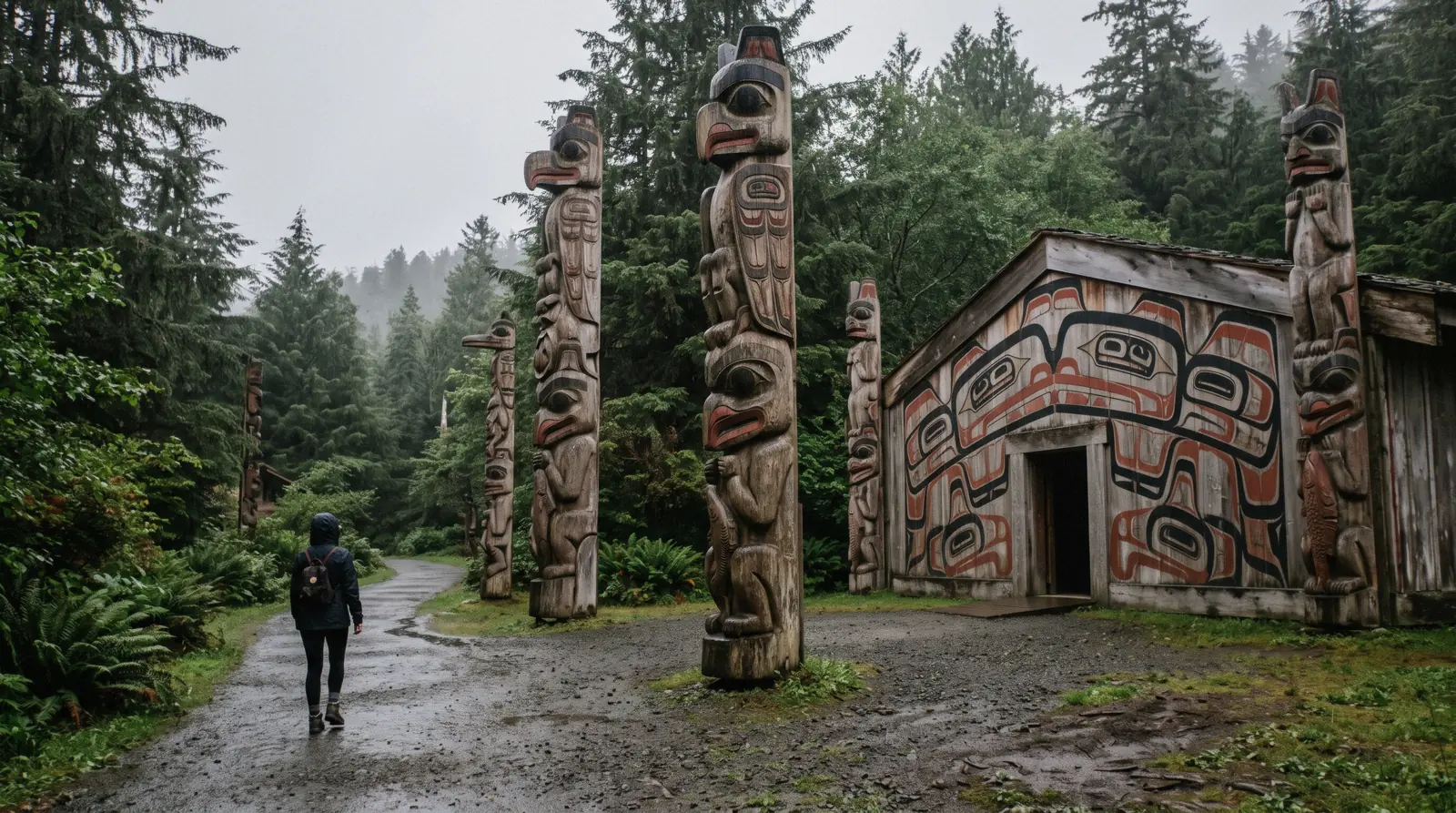
Totem Bight State Historical Park
Totem Bight State Historical Park is the only totem site around Ketchikan with a clean, published price. Alaska's park agency charges a $5 day-use fee per person, parking on site is free, and the gate is open the same hours every day of the year. That makes this the one totem park you can actually plan a budget against. This page prints what the official sources state, and says plainly where they state nothing. For the wider totem picture, see our guide to totem poles. The town all of this sits in is the Ketchikan guide this park belongs to.
Quick answer The $5 totem park at milepost 10, and how to get there.
Totem Bight State Historical Park sits at 9883 N Tongass Highway, milepost 10, about ten road miles north of downtown Ketchikan. Alaska DNR publishes a $5.00 day-use fee per person and free on-site parking. The park is open 7:00am-6:00pm year-round. Its totems were repaired or rebuilt starting in 1938 under a US Forest Service and Civilian Conservation Corps program that hired retired Tlingit and Haida carvers, and a replica clan house stands among them. No bus stop or walking route from the cruise berths is published, so most visitors arrive on a booked tour, by taxi or by rental car. Compare totem tours on our tours catalogue or read how to get around.
Key takeaways
- The day-use fee is $5 per person, which is the only exactly published totem-site price in the Ketchikan area.
- The totems you see were carved or restored from 1938 onward by Tlingit and Haida carvers hired through the Civilian Conservation Corps, a story told in full at the Totem Heritage Center.
- Reaching milepost 10 needs wheels, so check getting around Ketchikan before deciding between a tour and a taxi.
- If you would rather see totems on foot from the ship, Creek Street and downtown are closer alternatives.
Key facts
Opening hours
| Daily, all year | 07:00–18:00 |
|---|
Admission
- Adult
- $5 per person day use
- Reduced
- Picnic shelter reservable at $30 a time block
- Free
- Parking is free
Planning it
- Time needed
- Not stated by Alaska DNR. Our routing: one hour for the poles, the clan house and the shore path
- Book ahead
- Optional — walk-up usually fine
- Address
- 9883 N Tongass Hwy, milepost 10, Ketchikan, AK
The state park publishes a clean price, which makes this the one totem site you can plan against. The Alaska DNR row is the park itself. The tour rows are listings that include it, and they cost more because they carry you there and back.
The $5 is the cheap part. The real question is transport: the park sits at milepost 10, and a ship call plus a bus timetable rarely agree.
| Option | Price | Includes | Cancel | Book |
|---|---|---|---|---|
| Walk in yourselfAnyone with a car, a bus fare or a pair of legs and half a day. | $5 per person day use | The clan house, the pole stand, the shore path, free parking | Nothing to cancel | Official site |
| Totem Pole, Wildlife & City Trolley TourA ship call, where the bus timetable will not fit. | From $85 | 130 minutes, the poles and the town | Free up to 24 hours before | Check Availability |
| Alaska Native Cultural and Scenic Shore ExcursionAnyone who wants the carving explained by the people whose it is. | From $84 | Three hours, Native guided, four wildlife viewpoints | Free up to 24 hours before | Check Availability |
The picnic shelter is reservable at $30 a time block per the DNR fee schedule, which is the only other figure the park publishes.
Tours that include Totem Bight
Four listings that stop at the park, so you do not have to solve the bus timetable. Prices, ratings and durations are the platform’s own figures.
 from $85
Free cancellation
from $85
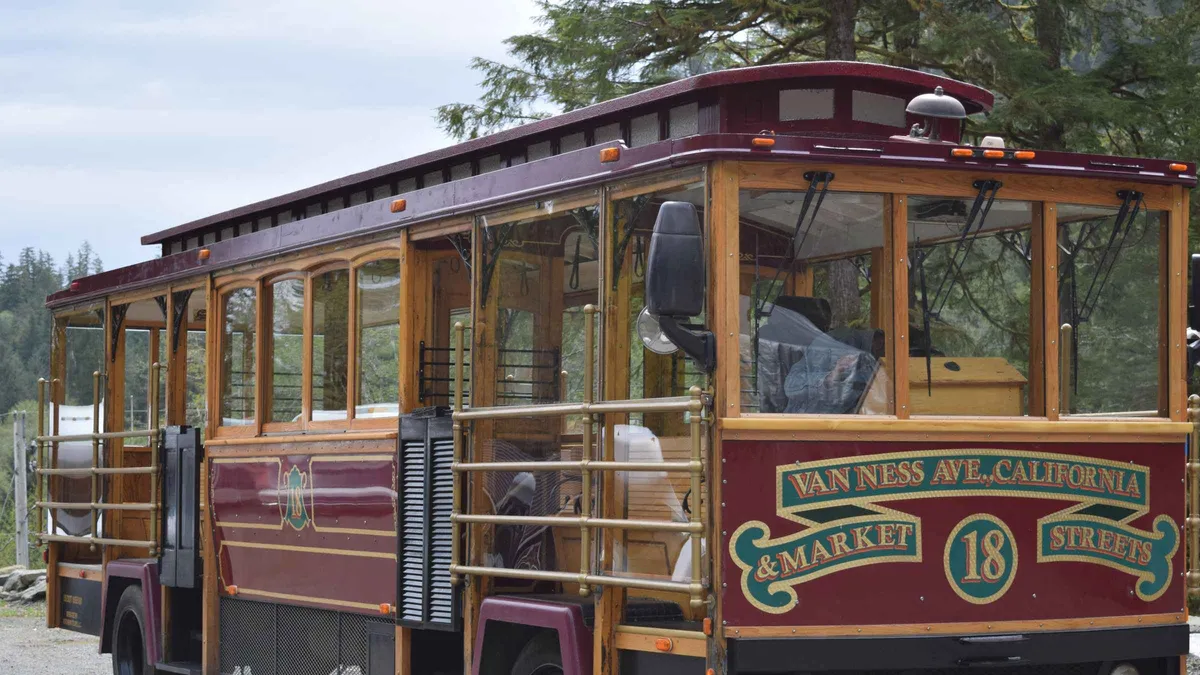
Free cancellation Ketchikan: Totem Pole, Wildlife & City Trolley Tour
An open-sided San Francisco style trolley tours Saxman Native Village's carved totem poles and carving shed, then continues to Herring Cove for a chance at eagles, seals and bears. A shorter option for travelers who mainly want the totem poles and a quick wildlife stop.
Check Availability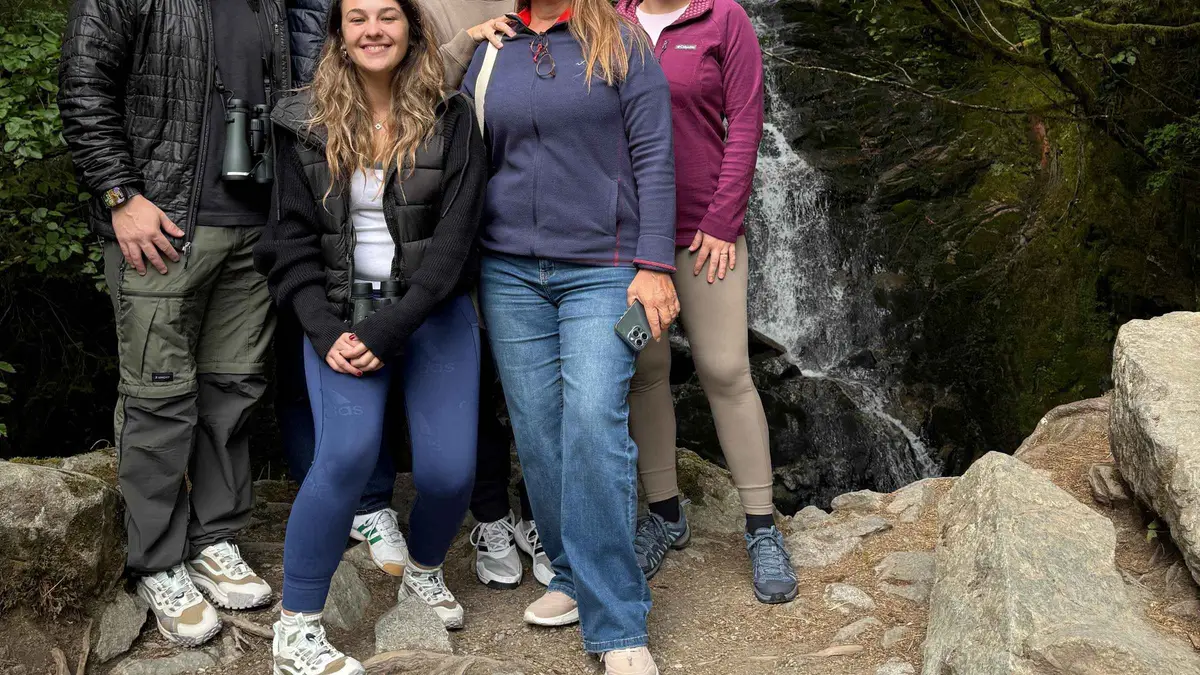 from $84
Free cancellation
from $84
Free cancellation Ketchikan: Alaska Native Cultural and Scenic Shore Excursion
A Native-guided van tour run by Clan House Tours stops at four wildlife viewpoints and Totem Bight State Historical Park to cover Haida, Tlingit and Tsimshian history and craft. Fits travelers who want cultural context alongside a chance at spotting bears, salmon and eagles.
Check Availability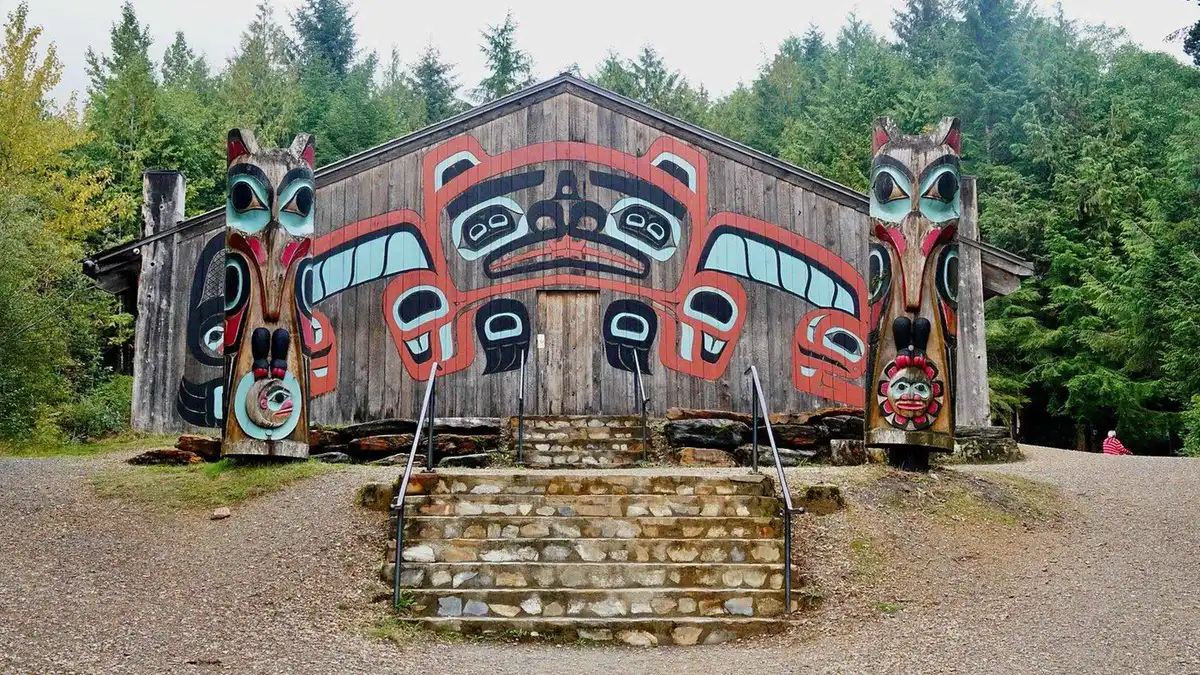 from $99
Free cancellation
from $99
Free cancellation Ketchikan: City Tour, Saxman Village, & Salmon Tasting
A luxury coach carries riders to the Eagle Point Education Center for a smoked salmon tasting, then through downtown landmarks to Saxman Native Village and its totem poles. A straightforward pick for anyone wanting Native history and a city overview in one 2.5 hour ride.
Check Availability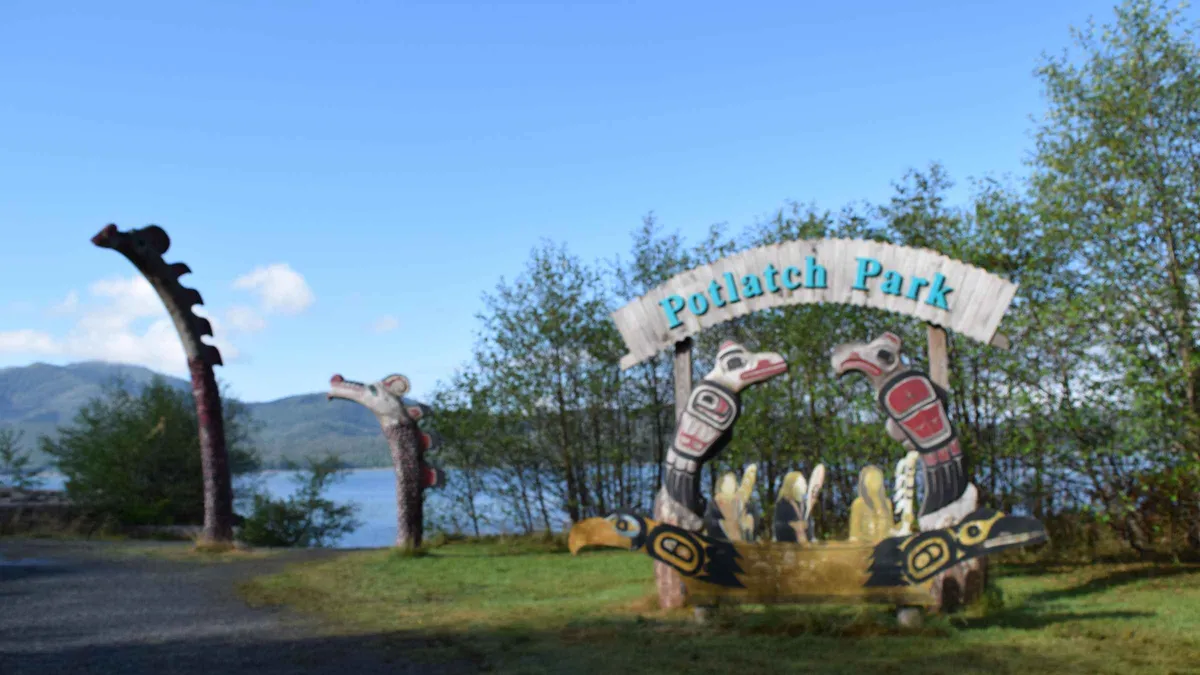 from $85
Free cancellation
from $85
Free cancellation From Ketchikan: Potlatch Totem Park and Herring Cove Tour
This van tour combines a Potlatch Park visit, with its totem carving center and antique firearms display, with time at Herring Cove watching for bears, eagles and seals. A middle-ground pick for those wanting both carving history and a wildlife stop in one trip.
Check AvailabilityPrices, ratings and details are the platform's own. dollar figures are the listed prices — the platform bills in your account's currency.
What Totem Bight actually is
Totem Bight State Historical Park is a state park, not a village, not a private attraction and not a living Native community. That distinction matters, because Ketchikan has several totem sites and they are run by different hands. Saxman is a real village with its own city government. The Totem Heritage Center is a city museum that keeps historic poles indoors. Potlatch Totem Park is private land next door. Totem Bight is owned by the people of Alaska and run through the Department of Natural Resources, which is why its price is published in an official fee schedule rather than left to an operator.
The site covers 8.5 acres of historic core on the shore of Tongass Narrows, at milepost 10 of the North Tongass Highway. It holds a collection of standing totem poles and a full-scale replica of a traditional Tlingit clan house, set in coastal rainforest with a beach below it.
Here is the honest framing many visitors miss: most of the poles you see are not antiques standing where history left them. The park began as a Depression-era work project. Starting in 1938, the US Forest Service and the Civilian Conservation Corps hired retired Tlingit and Haida carvers to salvage and reproduce poles that were rotting in abandoned village sites around the region. Old, fragile poles were moved to museum care, and carvers made new versions using traditional hand tools and pigments the old way, with colors ground from clam shells and salmon eggs. So Totem Bight is an outdoor museum of recreated poles, made by the descendants of the original carvers, in a forest setting built to feel like a village site.
If you want the original 19th-century poles, those are indoors at the Totem Heritage Center downtown. If you want carved poles standing in trees with water below, this is that place. It is also the cheapest totem site per head, because the published fee is $5 per person and nothing else is added at the gate. A small picnic shelter on site can be reserved for a $30 time block through the state. That is the entire published price list.
What you actually see, in the order you meet it
You arrive at a small parking area just off the North Tongass Highway, roughly ten road miles north of downtown. There is no visitor center building and no ticket window in the ordinary sense. The state fee schedule sets a $5 per person day-use fee, so you pay or post your fee at the on-site station and walk in. Signs introduce the site. From here it is a walking visit on footpaths through rainforest.
A loop trail of modest length leads through second-growth coastal forest. Expect the ground to be soft, the air to smell of wet wood and salt, and the light to be green and filtered. The trail is graded for a general visitor rather than a hiker, but the state does not publish an accessibility statement for the park, so treat any smooth-surface assumption as unverified.
The poles come first in ones and twos, then in groups. Each stands on its own, with an interpretive sign explaining the crest figures and the family or clan story it carries. You are looking at frog, raven, eagle, bear and killer-whale crests among others, carved in the classic northern formline style. Because these are carvings made in the old manner, many show natural pigment rather than bright modern paint. Look at the tool marks. The 1938 program specified traditional hand tools, and you can read the adze work up close in a way you cannot on a fresh factory-copy pole.
The centerpiece is the replica clan house. From outside it is a large cedar plank structure with a carved house screen and entrance pole. Inside, the thing to find is the set of carved interior house posts, which were done by Charles Brown, a Tlingit carver of Saxman. The room gives you a sense of scale that no museum case can: the posts run floor to roof beams, and the whole building would have held a lineage group, its belongings and its ceremonies.
Finally the trail drops toward the beach on Tongass Narrows. On a clear day the water view across to the islands is the quiet payoff of the site, and on a wet day the forest and carvings carry it alone. Plan to read the signs rather than photograph the poles and move on. The stories on the placards are half the visit, and the whole circuit with reading time fits comfortably inside an hour and a half.
Hours, cost and what is not published
This is the page's strength, so here are the clean figures. Alaska DNR publishes a day-use fee of $5.00 per person for Totem Bight in its unit fee schedule. Parking on site is free. The park is open 7:00am-6:00pm, year-round, with no stated closed season. A reservable picnic shelter costs $30 per time block through the state's system.
That is genuinely all the published pricing there is. For comparison, this is the only totem site in the area with an exact, current, official admission figure. The Totem Heritage Center publishes its hours through the city but its exact admission price could not be confirmed on an official ketchikan.gov page during our check. Saxman village sets its own self-guided admission fee and no official page publishing the current figure was found. Potlatch Totem Park, directly next door, publishes no admission price, hours or season on its own site at all. If you are the sort of traveler who wants to know the number before you arrive, that alone decides where to send your totem afternoon.
Now the gaps, stated plainly. The park does not publish a recommended visit duration. It does not publish an accessibility statement covering the trail surface, grades or the clan house entrance. It does not publish ranger talk times, a guided-walk schedule or an on-site contact number. Alaska State Parks pages do not offer a live bus stop or transit connection either, which matters a lot given the location at milepost 10.
What should you do with the missing pieces? For a guided option with a fixed price and a pickup, look at the totem and trolley tour or the broader list of Ketchikan shore excursions. For a do-it-yourself day, the state's site confirms the gate hours, so arriving well before 6:00pm is safe in any season. For weather, assume rain gear. Ketchikan's climate is one of the wettest in the United States, and the park is outdoor walking the whole way. For accessibility questions, contact Alaska DNR parks directly before your visit rather than guessing, because no official statement exists to plan around.
Getting there from the cruise berths
Totem Bight is at milepost 10 on the North Tongass Highway, which means roughly ten road miles from the downtown berths. There are three ways to cover that distance, and only one of them works well.
On foot, forget it. The highway north of town is a rural road with no published sidewalk or trail connection to the park, and no official source describes a walking route. Ten miles each way is not a walk, it is a transport problem.
By public bus, the honest answer is that the fixed-route system does get you northbound on the Tongass corridor, and the adult fare is $2.00 per ride, half price for youth and seniors, with a $5.00 day pass if you will ride several times. But here is the catch the fare table does not solve: no official transit page we reviewed publishes the stop location or walking distance from the nearest stop to the park gate. The free downtown shuttle zone runs only from Bryant Street to the Coast Guard Base, so it will not take you north at all. If you attempt the bus, confirm the stop with the transit system before you sail. If you want the full picture of routes and fares, our getting around page covers them.
By booked tour, this is what most cruise passengers do, and it is the routing we recommend. The totem and trolley tour is $85 per person and covers totem stops by vintage-style trolley with a guide, so the transport and the interpretation are both handled. Alternatives include the city and Saxman combination, or tours pairing totem parks with the rainforest at Herring Cove. A taxi from downtown would cover the ten miles but no official source publishes the taxi fare, and ride-share availability in Ketchikan is not confirmed on any official page, so get a price from the driver before you commit.
Totem Bight map: the park and the north road
The park sits at milepost 10 on the North Tongass Highway. The other pins are the nearest places on this site.
Do and don't at Totem Bight
Simple field rules for the day you go.
Do
- Bring exact cash or your chosen payment for the $5 per person day-use fee before you leave the road.
- Book the totem and trolley tour if your ship call is short, so transport and story are handled together.
- Read the interpretive signs at each pole, since the crest stories are the point of the site.
- Go inside the clan house and look up at the carved interior posts by Charles Brown.
Don't
- Don't try to walk there from the cruise berths, ten road miles north is not a walking errand.
- Don't assume the bus drops you at the gate, since no official source publishes a stop or the walking distance from one.
- Don't skip rain gear, this is an outdoor forest walk in one of America's wettest cities.
- Don't confuse this site with Potlatch Totem Park next door, which is private and publishes no prices or hours.
How long to give it
The state publishes no suggested visit duration, so these routings are built from the site's actual size: a short forest loop, a set of poles with interpretive signs, and one furnished building.
Short ship call, two hours ashore to spare. Do not attempt it. With roughly ten road miles each way plus waiting for transport, a two-hour window buys you stress instead of carvings. Spend that window downtown instead, walking Creek Street and the boardwalk, which cost nothing and sit minutes from the berths. Totem Bight rewards a visitor with time.
Full day in port. This is the natural fit. Book a morning totem tour, which handles the ten miles and gives you the story as you walk. The totem and trolley tour runs 130 minutes and leaves most of a port day free. Back downtown, add the indoor historic poles at the Totem Heritage Center in the afternoon, and the two sites will explain each other. The center holds the fragile originals. Totem Bight shows the recreated poles standing in the forest the way their makers intended. Together they are worth more than either alone.
Second visit or long independent day. Rent wheels in the morning and drive out yourself, paying the $5 fee at the gate, then continue to Potlatch Totem Park next door on the same road if you want a second take on carving styles. The $5 day-use fee and the 7:00am-6:00pm year-round hours make an unhurried self-guided morning cheap and easy to schedule. Walk the loop slowly, read every sign, sit at the beach, and be back on the highway by mid-afternoon. What this routing skips is interpretation by a guide, so bring the background from our totem poles primer or the visit will look like a field of poles rather than a collection of stories.
Five things most visitors do not know
- The poles are largely recreations, not survivors. The 1938 program had carvers reproduce poles rotting at abandoned village sites, while the fragile originals went to museum care, which is why the oldest poles sit indoors at the Heritage Center rather than here. (Alaska DNR park page)
- The carvers were paid professionals in a Depression work program. The Civilian Conservation Corps project hired retired Tlingit and Haida carvers and specified traditional hand tools and pigments ground from clam shells and salmon eggs. (Alaska DNR park page)
- The clan house interior posts have a named artist. Charles Brown, a Tlingit of Saxman, carved the interior house posts of the replica clan house. (Alaska DNR park page)
- It is a listed historic place. The 8.5-acre historic core was added to the National Register of Historic Places. (Wikipedia, National Register listing)
- Nobody publishes how long the walk takes, whether the trail is accessible, or a bus stop for the gate. Time needed and accessibility are both listed as not stated by the state's own information, and no transit connection appears in official sources. (nobody publishes this)
Next
All the totem sites
Four sites compared, only one of which publishes a price: Ketchikan totem poles.
The choice this page is part ofGetting around
The $2.00 bus that reaches milepost 10, and whether it fits a call: getting around Ketchikan.
How you get herePotlatch Totem Park
A mile further north, and it publishes nothing at all: Potlatch Totem Park.
A mile up the roadTotem Bight questions
How much does Totem Bight State Historical Park cost?
The published day-use fee is $5.00 per person according to the Alaska DNR unit fee schedule, and on-site parking is free. A reservable picnic shelter costs $30 per time block. That is the whole official price list. Unlike other totem sites around Ketchikan, no additional admission, guide fee or mandatory charge is published for the park itself. If you arrive on a commercial tour, the tour company charges its own price on top, which is why an independent visit at the gate is the cheapest way in. See our Ketchikan costs page for context.
What are the opening hours, and is it open all year?
Yes. Alaska DNR lists the park as open 7:00am-6:00pm, year-round, with no stated closed season. That makes it easy to plan around a cruise call in summer and equally usable on a shoulder-season or winter trip if you have your own transport. The state does not publish separate gate and trail hours, ranger-station hours or holiday closures, so the single daily window is all there is to work with. Arrive with enough daylight left to enjoy the short forest loop, and remember the location at milepost 10 means the trip itself takes time. Check weather before you go.
Is Totem Bight worth visiting compared with Saxman or the Heritage Center?
They do different jobs. Totem Bight is the only site with an exactly published price, $5 per person, and it shows recreated poles standing in rainforest with a full replica clan house. The Totem Heritage Center holds fragile original 19th-century poles indoors, which is where the real antiques live. Saxman is a living village whose current self-guided fee is not published on any official page we found. For carvings in a forest setting at a known price, Totem Bight is the strongest pick. Our totem poles guide compares all the sites.
How do I get to Totem Bight without a tour?
It is difficult, and you should know that before you plan it. The park sits at milepost 10 on the North Tongass Highway, roughly ten road miles from downtown. No official source publishes a walking route, and the free downtown shuttle zone stops far short of the park. The borough bus does run the corridor and costs $2.00 per adult ride, but no official page publishes the stop location or the walking distance from the stop to the gate, so confirm details with transit first. A taxi or rental car works, though taxi fares and ride-share availability are not published on any official source.
What is Totem Bight like in the rain?
Wet. The whole visit is an outdoor forest walk, and Ketchikan's climate records 149.54 inches of precipitation in an average year, with measurable rain on about 233 days. In practice that means the trail is damp, the boardwalk and roots are slick, and the light under the canopy is dim. The carvings themselves do not suffer in a shower and the forest arguably looks best wet. Pack a rain jacket, waterproof shoes and a hat with a brim rather than an umbrella in wind. If steady rain ruins the walk entirely, the indoor original poles at the Totem Heritage Center are the fallback.
Who is Totem Bight best suited for?
It suits three kinds of visitors well. Cruise passengers with a half day free who want the classic totem-in-the-forest scene, ideally by booking a guided option such as the trolley tour. Independent travelers with a rental car who like reading interpretive signs at their own pace and paying a known $5 at the gate. And anyone specifically interested in carving history, because the site shows the 1938 Civilian Conservation Corps work up close with adze marks and traditional pigments. It is less suited to very short calls, to visitors needing a confirmed accessible trail, since the state publishes no accessibility statement, or to anyone expecting a visitor center with staff and exhibits.
Totem Bight on video
Three films that show this place at real pace, which is the check on every time figure above.
11 Amazing Things You MUST Do in Ketchikan, Alaska
Walks the pole stand and the clan house.
Video: Art We There Yet?Best Things to Do in Ketchikan Alaska Travel Guide
Covers the north road and both totem parks.
Video: Destination AwaitsWhat to Do in Ketchikan Alaska on a Cruise Port Day
Shows the park as part of a single ship call.
Video: Take2TravelLinked as published on YouTube. We have no connection to these channels.
We may earn a commission if you book through one of our links, at no extra cost to you. Full affiliate disclosure